
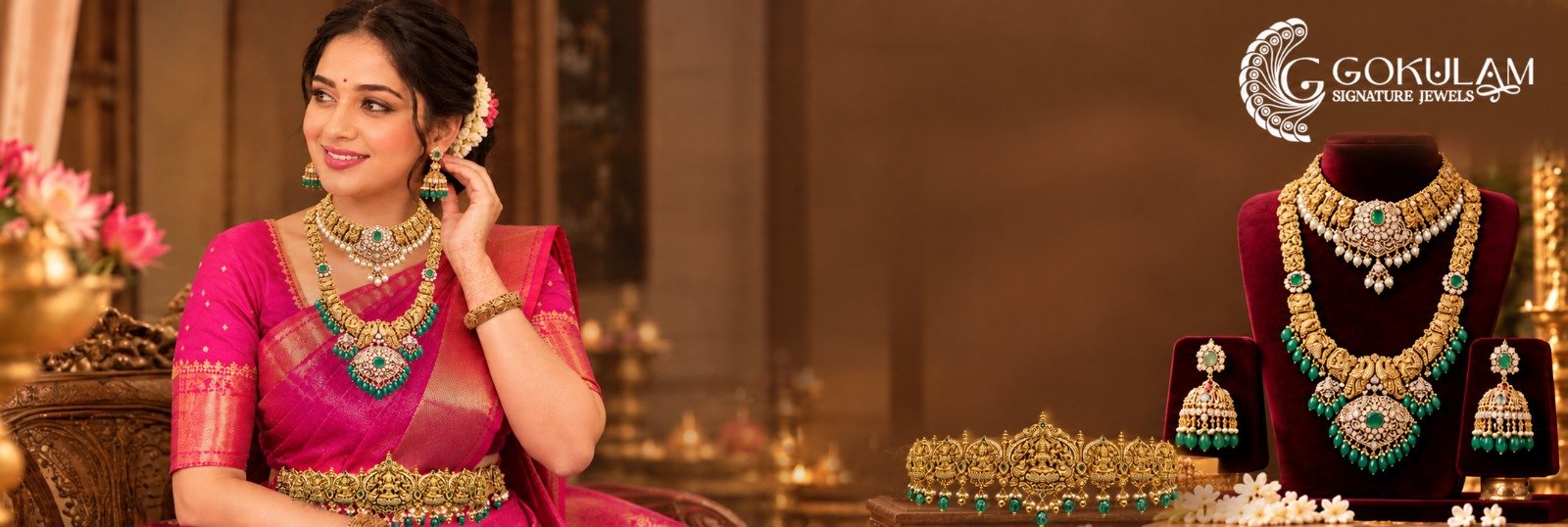
A wedding outfit feels more complete when the jewellery matches its style and details. Brides can explore different designs, finishes, and ornament combinations to find pieces that suit their preferences. When selecting a bridal jewellery set, pay attention to the colour of your attire, the type of embroidery, and the neckline of your blouse or lehenga. These small details can help you choose jewellery that looks coordinated, feels comfortable, and complements your appearance throughout the wedding celebrations.
Your outfit guides jewellery selection. Rich fabrics and detailed embroidery can carry traditional statement pieces, while simpler outfits leave room for elaborate necklaces or coloured stones.
Kanjeevaram silk sarees often pair well with gold tones and traditional motifs. An embroidered lehenga may suit a stone-studded set, while a simple saree can support a statement necklace. Try Jewellery matching with wedding outfit ideas for cohesion.
Consider your outfit’s main colour, embellishments and metal details. Red, maroon, mustard and deep green often suit gold tones. Ivory, blush, lavender and cool pastels can pair with silver finishes, clear stones, or subtle gold accents.
If your blouse has emerald, ruby, or pearl details, repeat one colour in your jewellery. Emerald CZ Bridal designs add a green accent to matching embroidery or contrasting jewel tones. CZ stones offer sparkle; check the setting and material details before buying.
The blouse neckline affects how a necklace sits. A deep neckline can accommodate a pendant or long necklace, while a high neckline may suit a shorter design. Leave embroidered details visible rather than covering them.
A Bridal haram set creates a strong vertical line for traditional styling. Wear it alone or with a choker of a distinct length. Try it with your blouse and saree drape, checking that the pendant stays centred as you move.
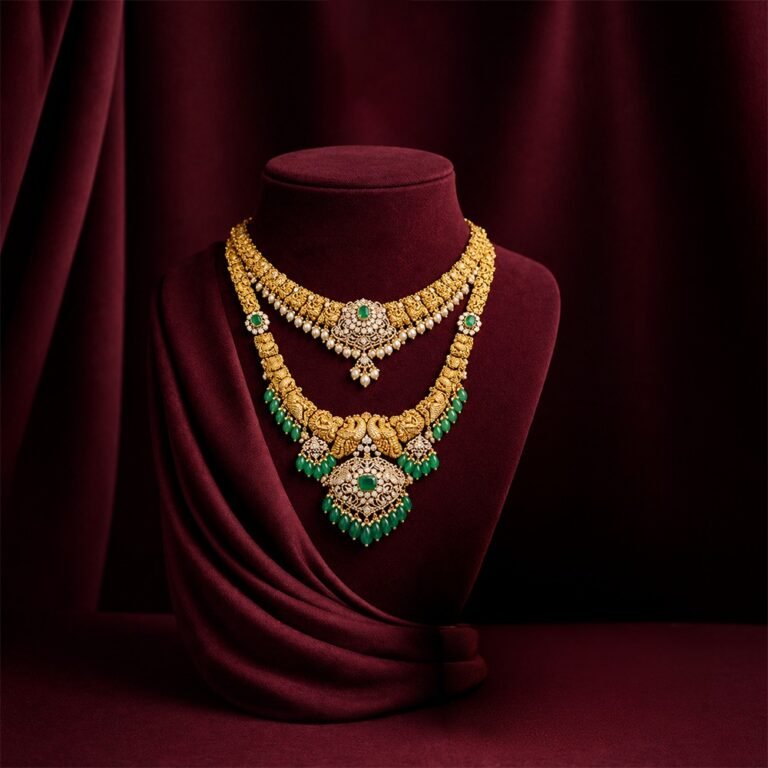
The Necklace is often the set’s focal point. Temple motifs, coin patterns and antique finishes suit heritage outfits; cleaner pendants and coloured stones can complement contemporary clothing.
Compare Bridal Jewellery set designs by length, weight, finish and motif. For layering, choose different lengths and visual weights so pendants do not overlap or look crowded.
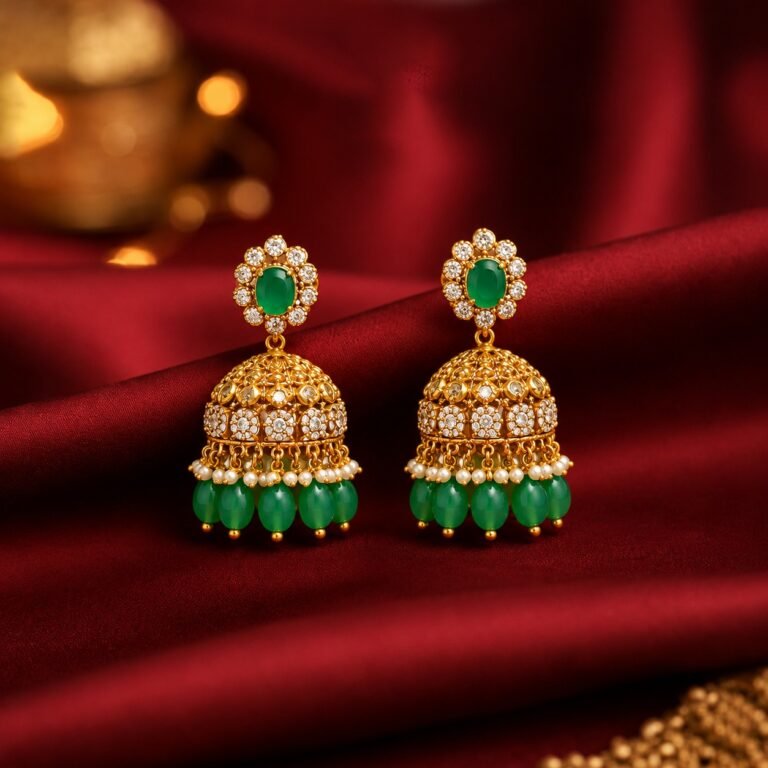
Your Ear rings should complement, not compete with, the necklace. Jhumkas and temple earrings suit traditional looks chandbalis, drops, or stone earrings can work with lehengas. Consider your hairstyle and avoid designs that catch in loose hair.
With a detailed necklace, choose simpler earrings. If earrings are the statement, keep the necklace restrained. Check weight, fastening and comfort before the ceremony.
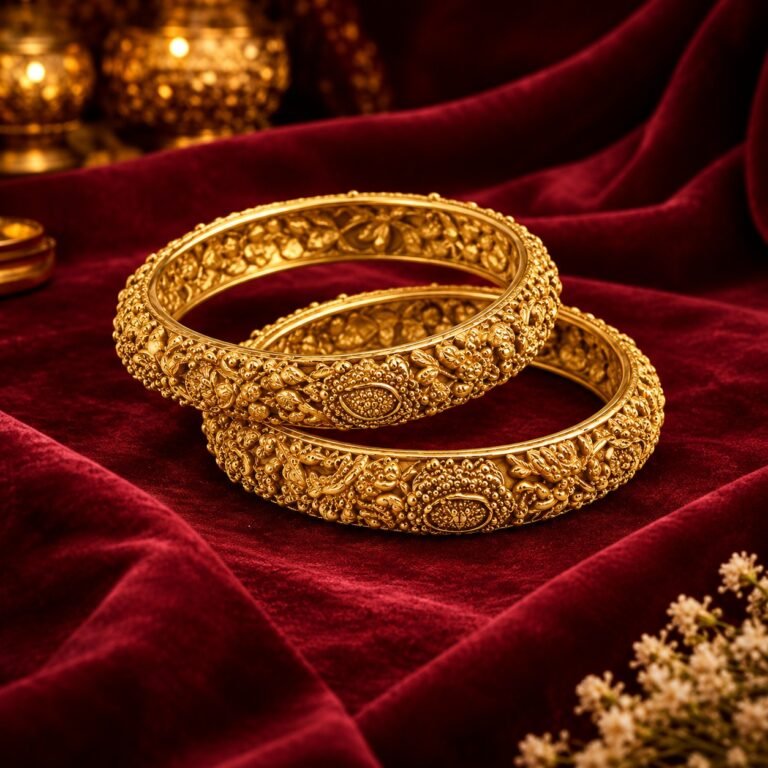
Bangles add detail to the hands during rituals and photographs. Antique styles suit traditional gold-toned sets, while stone-studded designs can complement crystal jewellery. Repeat a metal tone or motif to connect the pieces.
Consider sleeve length and blouse decoration before choosing a stack. Try bangles with your outfit and check whether they slide, catch on embroidery, or restrict movement.
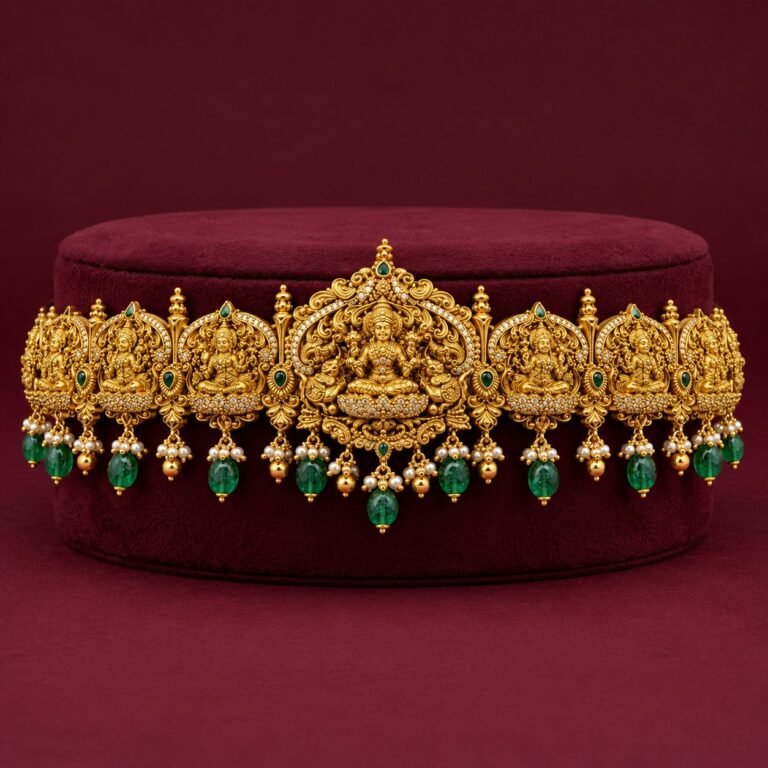
A Voddanam, also called a vaddanam or bridal waist belt, defines the waist and can secure saree pleats. Temple motifs suit classic silk sarees, while simpler belts may work better with heavily embroidered outfits.
Ensure the belt sits securely without pinching. Match its width and finish to your outfit and jewellery; a simple belt can balance elaborate necklaces and earrings.
South Indian bridal jewellery often includes temple necklaces, long harams, jhumkas, bangles, and a vaddanam. Traditions vary, so choose pieces that suit your ceremony and feel comfortable.
A Temple Bridal Jewelry Set suits silk sarees, zari work and heritage-inspired ceremonies. Shared motifs can connect the pieces without making them identical. A Silver bridal jewellery set or Designer Silver Jewellery may suit cool tones or contemporary outfits. Confirm whether the piece is solid silver or plated.
Knowing How to choose a bridal Jewellery set also means deciding whether you prefer a traditional arrangement or a few meaningful pieces. If your family has heirloom jewellery, consider whether a new necklace can complement it instead of replacing every item. You can repeat the same finish or motif across new and old pieces to create a connected look. Bring photographs of heirlooms when shopping so you can compare colour, scale and detailing.
Also consider how much jewellery you are comfortable wearing. A grand set can feel appropriate for the main ceremony, but lighter earrings or a simpler necklace may be easier for a reception or another function. Planning each outfit separately helps you avoid buying pieces that look alike but serve the same purpose.
When comparing Wedding haram necklace designs, consider the saree border, neckline and any shorter necklace. Keep layers distinct so pendants do not overlap.
Check weight and closure, too. Try the necklace while sitting and walking and ask whether its length is adjustable. Fit it with the planned outfit and hairstyle.
Your height, hairstyle and face shape can help you compare designs, but they should never limit your choice. Longer necklaces create a vertical line, while chokers draw attention to the neckline. If your hairstyle is elaborate, check that earrings and hair ornaments do not become tangled. Most importantly, move around during the fitting. Jewellery that stays secure and feels comfortable will be easier to wear with confidence throughout the celebration.
Set a budget and compare material, weight, craftsmanship, stone settings, clasp quality and care requirements. Ask for a clear product description and purchase documentation; similar-looking pieces may use different materials.
Consider whether you can reuse pieces for festivals and family weddings. Compare designs with your outfit and ask about materials, care and fitting before deciding.
Terms like silver, gold-toned, antique finish and CZ refer to different jewellery materials, finishes, or stone types, so each should be understood separately rather than used as the same description. Read the product details carefully. Ask about the base metal, plating, stone type, cleaning method and whether the colour or finish needs special care. If the piece is sold as silver or precious metal, review the relevant markings and invoice details.
For CZ jewellery, inspect whether the stones are set securely and whether the design feels comfortable against your skin. For plated pieces, ask how perfume, moisture and frequent polishing may affect the finish. Understanding these details helps you compare products fairly and choose a set that matches your expectations.
Try the complete set with your outfit and take front and side photographs. Walk, sit, turn and raise your arms to check whether pieces shift, pull, or catch on fabric.
Use this checklist:
A final fitting reveals issues early and lets you remove accessories if the look feels crowded. Your set should reflect your taste and support the outfit.
Save a photograph of your wedding outfit and note the blouse neckline, embroidery colours and any accessories already selected. Decide which item should be the focal point, then create a short list of pieces that support it. This makes appointments more focused and helps you compare options without getting distracted by every design on display.
If possible, take the blouse or a clear photograph of it when trying necklaces. Bring the dupatta or saree pallu into the fitting when its placement affects the necklace. Ask someone you trust to view the combination from a distance, since wedding guests and photographers will often see the full look rather than the details close up.
Choosing bridal jewellery becomes simpler when the outfit guides each decision. Consider colour, neckline, fabric, traditional details, comfort and budget before selecting your necklace, earrings, bangles and vaddanam. Whether you prefer Temple jewellery for bridal wear, a silver set, or emerald CZ accents, try the full combination. A balanced set lets your outfit and personal style work together throughout the celebration.
Start with the outfit's colour, fabric, embroidery and neckline. Choose a necklace that fits the neckline, then coordinate earrings, bangles and a waist belt using similar finishes or motifs. Try the complete combination before buying.
Temple-style necklaces, long harams, jhumkas, bangles and a vaddanam often complement silk sarees with zari borders. Select pieces according to your ceremony, blouse design, comfort and personal preference rather than following a fixed rule.
Yes. Silver or silver-toned jewellery can work with cool colours, pastel outfits and contemporary designs. Check the jewellery quality and finish and choose stone details that complement your outfit's embroidery.
Choose pieces with clearly different lengths and balanced visual weight. A choker can sit near the neckline while a long haram creates a vertical line. Try them together to ensure the pendants do not overlap or feel heavy.
Not necessarily. Coordinating colours, metal finishes, or motifs is usually enough. A contrasting stone or finish can add interest, provided it complements the outfit and does not make the overall styling look crowded. Brides can discuss suitable combinations with Gokulam Jewellers.
Silver Bridal Sets in Hyderabad – Elegant Jewellery for Your Special Day A bride’s wedding jewellery is more than just…
Budget Friendly Silver Jewellery in Hyderabad – Style, Quality & Affordability Silver jewellery has always been a timeless choice for…
Where to Buy Silver Articles in Hyderabad Silver articles have always been an important part of Indian traditions, gifting culture,…
Best Silver Jewellery Deals in Tenali – Explore Elegant Collections at Gokulam Jewels Introduction Silver jewellery has always been a…
Best Silver Jewellery Stores in Hyderabad for Elegant & Trendy Collections Introduction Silver jewellery has become one of the most…
Kukatpally, Hyderabad
Tenali Andra pradesh
Added to cart
Check out our shop to see what's available
Loading coupons...
| Metal | Price |
|---|---|
| 24K Gold (1 Gram) | ₹ 15,200.00 |
| Silver (1 KG) | ₹ 245,000.00 |