
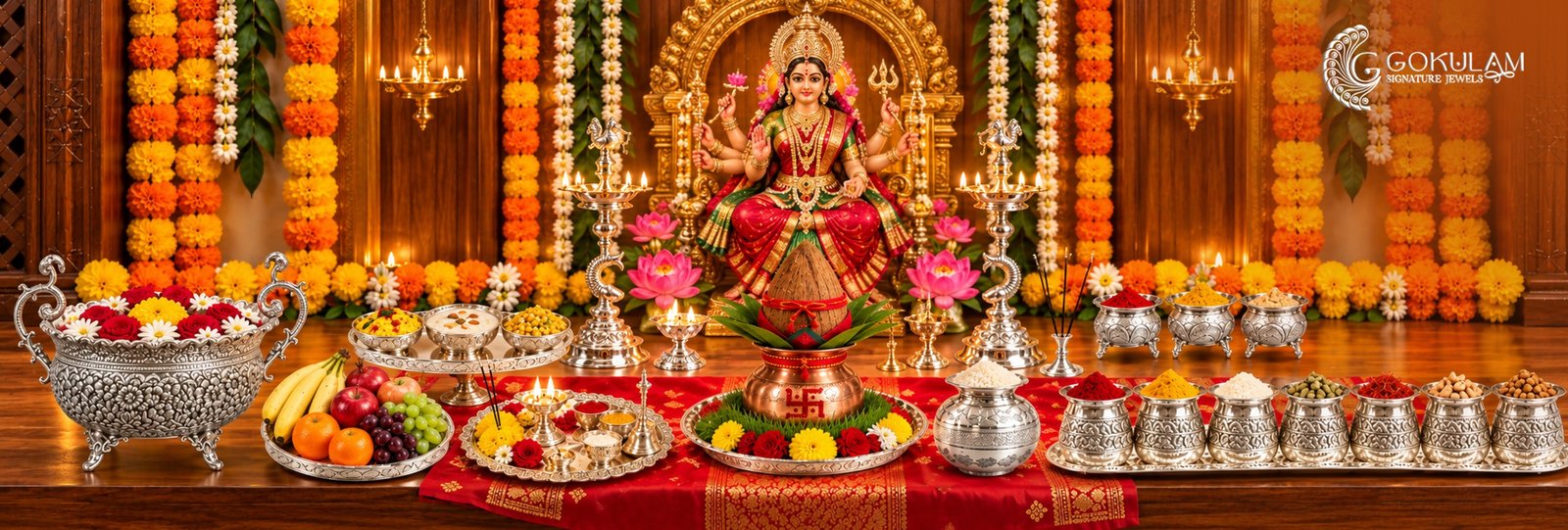
Navaratri is celebrated with nine days of Devi worship, where families follow different Pooja traditions, prepare naivedyam and decorate the prayer space every day. Planning a Navaratri celebration at home becomes easier when the daily goddess form, alankaram, food preparation and Pooja needs are organized in advance. Knowing what to prepare for each day helps families plan the celebrations in advance while staying connected to their traditional ways.
Begin by choosing a clean and comfortable space for Devi Pooja, where the idol or photo, lamp, flowers and naivedyam can be arranged neatly. If your family follows Golu or Bommala Koluvu, the dolls can be displayed nearby while keeping enough space for daily prayers. Once the main setup is ready, fresh flower garlands, rangoli and traditional fabrics can be added to bring colour and a festive touch to the prayer area.
With the Pooja space prepared, the next step is to organize what is needed for each day of Navaratri. The flowers, alankaram colours and naivedyam ingredients can be selected according to the Goddess worshipped that day and kept ready beforehand. Pooja lamps, plates, bowls and idols can also be cleaned before the festival, making them convenient to use throughout Navaratri and again during Diwali, Varalakshmi Vratam and other family Poojas.
Every day of Navaratri brings a different form of the Goddess, along with a traditional alankaram and naivedyam. Knowing these details beforehand makes it easier to plan the day’s Pooja, choose suitable colours and prepare the offering. Use the table below as a simple day-wise reference for your Navaratri celebration at home.
| Date | Divine Avatars | Alankaram | Naivedyam |
|---|---|---|---|
| 11 October | Sri Bala Tripura Sundari Devi | Light pink or orange | Chalimidi, vadapappu and payasam |
| 12 October | Sri Gayatri Devi | White or orange | Pulihora (tamarind rice) |
| 13 October | Sri Annapurna Devi | Sandalwood, yellow or red | Pongali |
| 14 October | Sri Maha Chandi Devi | Gold or royal blue | Garelu |
| 15 October | Sri Lalitha Tripura Sundari Devi | Red or yellow | Daddojanam (curd rice) |
| 16 October | Sri Saraswati Devi | Pure white | Atukula bellam or rava kesari |
| 17 October | Sri Maha Lakshmi Devi | Pink | Ksheerannam (milk payasam) |
| 18 October | Sri Durga Devi | Red | Shakannam or kadambam |
| 19 October | Sri Mahishasura Mardhini Devi | Dark brown, maroon or handloom | Garelu and payasam |
| 20 October | Sri Rajarajeshwari Devi | Green | Lemon rice and paramannam |
A beautiful Navaratri celebration at home can begin with a simple Pooja space that feels clean, peaceful and ready for daily worship. Place the Goddess idol or photo at the centre, with the deepam, flowers and naivedyam arranged within easy reach. A traditional cloth beneath the setup can add colour while giving the worship area a neat and festive look.
Small changes each day can make the space feel special without requiring elaborate decoration. Fresh chamanthi, jasmine or roses can be used for decorations and loose flower arrangements, while a simple rangoli near the Pooja room or entrance adds a traditional touch. Families arranging Bommala Koluvu can decorate the steps with flowers, traditional fabrics and soft lights, leaving enough space for each bomma to be clearly seen.
Daily Pooja items can be kept together so they are easy to use during harathi and naivedyam. A Thali Set is useful for arranging pasupu, kumkum, akshinthalu and flowers in one place. Traditional Silver Articles, including small bowls and Pooja plates, can hold prasadam or other offerings according to family traditions. Once arranged, these items can remain part of the Pooja space throughout the festival.
Choosing reusable Pooja essentials for a Navaratri celebration at home can make them useful well beyond the nine-day festival. Lamps, plates, bowls and devotional pieces used during Navaratri can later become part of daily Pooja, Diwali, Karthika Masam, Varalakshmi Vratam and other family occasions.
Navaratri rituals can vary between families, regions and generations, which makes home celebrations deeply personal. Elders can involve children in arranging flowers, drawing rangoli, setting up Bommala Koluvu and preparing items needed for daily Devi Pooja. Children can also learn about the Goddess worshipped each day, the meaning behind different offerings and the customs followed at home. Taking part in these simple activities helps traditional practices become familiar rather than something children only observe.
Naivedyam is also closely connected with daily worship during Navaratri. Depending on family customs, dishes such as pulihora, pongali, garelu, payasam or daddojanam may be prepared and offered to the Goddess before being served as prasadam. Preparing these recipes together gives younger family members a practical way to learn festive food traditions while allowing each household to continue the practices followed by earlier generations.
Planning a Navaratri celebration at home starts with understanding what the Pooja space actually needs. Consider the available space, daily rituals and items already in your collection before adding anything new. Deepams, plates, bowls or devotional pieces that suit regular worship can continue to be useful for Diwali, Karthika Masam, Varalakshmi Vratam, housewarming ceremonies and other auspicious occasions.
For families looking to add traditional jewelry to their festive collection, Gokulam Jewels offers Pooja essentials in different designs and sizes. Visiting the store allows you to view the items closely and choose what suits your home Pooja setup, while the online collection offers a convenient way to explore available options before making a selection.
Navaratri brings together devotion, family rituals and traditions followed across generations. Detailed daily preparation can make each day meaningful while keeping the focus on Devi worship. Explore Pooja essentials at Gokulam Jewels online or visit the store to choose traditional pieces for your festive and everyday worship.
Navaratri Pooja is commonly done in the morning or evening. Families can follow their traditional routine or consult their priest for specific Pooja timings.
Common essentials include a lamp, flowers, kumkum, turmeric, fruits, incense and naivedyam. Families may include additional items based on their household traditions.
Yes, the main Pooja setup can remain throughout Navaratri, while flowers, alankaram and naivedyam can be changed each day according to family traditions.
Choose jewellery that complements each day’s traditional colour and outfit. Silver jewellery can pair well with sarees, lehengas and other festive wear across Navaratri.
Yes, silver bowls can hold prasadam or Pooja offerings, while harathi plates help keep lamps, flowers and other essentials arranged during daily Devi worship.
Silver Bridal Sets in Hyderabad – Elegant Jewellery for Your Special Day A bride’s wedding jewellery is more than just…
Budget Friendly Silver Jewellery in Hyderabad – Style, Quality & Affordability Silver jewellery has always been a timeless choice for…
Where to Buy Silver Articles in Hyderabad Silver articles have always been an important part of Indian traditions, gifting culture,…
Best Silver Jewellery Deals in Tenali – Explore Elegant Collections at Gokulam Jewels Introduction Silver jewellery has always been a…
Best Silver Jewellery Stores in Hyderabad for Elegant & Trendy Collections Introduction Silver jewellery has become one of the most…
Kukatpally, Hyderabad
Tenali Andra pradesh
Added to cart
Check out our shop to see what's available
Loading coupons...
| Metal | Price |
|---|---|
| 24K Gold (1 Gram) | ₹ 15,200.00 |
| Silver (1 KG) | ₹ 245,000.00 |